
Indonesia-France Relations in the Field of Defense: Indonesia Rational Choice?

Mahasiswa Hubungan Internasional dari Universitas Kristen Indonesia
·waktu baca 6 menit


Tulisan dari Abdullah Akbar Rafsanjani tidak mewakili pandangan dari redaksi kumparan
 Perbesar
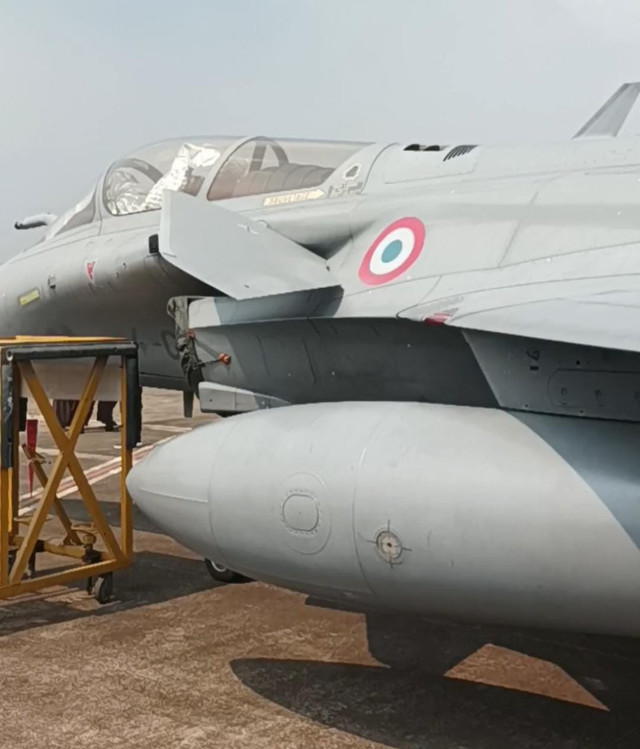
Indonesia is in the most ambitious defense modernization position since the reform era. Investments in cutting-edge defense equipment such as 42 Rafale fighter jets and 2 Scorpène submarine from France and emphasizing the transfer of technology by France to Indonesia, reflect Indonesia’s efforts to strengthen its military capabilities while maintaining strategic independence.
In this context, Indonesia’s defense relationship with France shows an interesting dynamic, especially when analyzed through Graham Allison’s rational choice, which emphasizes that state actors make decisions based on rational calculations of the benefits and risks of each policy alternative.
The United States Embargo and Indonesia’s Defense Dilemma
Indonesia’s defense relationship with the international world has never been separated from geopolitical pressure. In the 1990s to the early 2000s, Indonesia experienced a military embargo from the United States and its allies regarding the issue of human rights violations in East Timor. This embargo has had a significant impact on Indonesia’s military modernization capabilities, as access to advanced military technology controlled by the United States has become limited.
In addition, this embargo forced Indonesia to look for alternative sources of defense supply from other countries, such as purchases from Russia during the era of President Megawati and the most iconic was the purchase of Su-27 and Su-30. In the context of purchasing defense equipment, Indonesia is faced with a complex strategic dilemma.
If you buy from the United States, there are advantages in the form of high technological quality, interoperability with NATO alliances, and possible political support in regional crises. However, there is also a risk that any purchases could be linked to defense pact obligations, such End-User Aggrement or the Joint Defense Cooperation Agreements, which could limit Indonesia’s notoriously free-to-act foreign policy flexibility.
On the other hand, buying defense equipment from Russia opens up an alternative that is relatively independent of the western bloc, but carries the risk of being exposed to the Countering America’s Adversaries Through Sanctions Act (CAATSA), which could trigger economic and political sanctions from Washington.
Rationality in Strategic Choice: A Rational Choice Perspective
The concept of rational choice developed by Graham Allison, specifically through the concept of “Actor Rationality”, emphasizes that the state as a rational actor will weigh each alternative based on its costs and benefits. In the Indonesian context, every decision to purchase defense equipment is the result of complex strategic calculations.
For example, the purchase of Rafale fighter jets from France is not only seen as a mere acquisition of military technology, but also as a move to maintain a balance between strategic interests and political independence. Indonesia’s rationality can be seen from this aspect. First, diversify supply Indonesia does not depend on one country alone. By purchasing defense equipment such as from France, Indonesia minimizes the risk of technology monopolies, while reducing political pressure from one particular global Actor. Second, political and economic risk calculation.
Each alternative carries risks, France’s Rafale provides Indonesia with advanced European technology without any direct attachment to the US defense pact. While the Russian option presents CAATSA risks, it provides flexibility in more flexible foreign relations. Then third, strategic profit optimization. Within the framework of rational crhoice, the advantage is not only technical or military, but also geopolitical. Indonesia considers that defense relations with France can open up opportunities for technology transfer, personnel training, and long-term collaboration that are more stable than other options. Indonesia’s defense cooperation with France is not just a transaction of buying and selling defense equipment, but has developed into a strategic partnership. The modernization of Indonesia’s air fleet through 42 Rafale units is a symbol of the commitment of the two countries in the defense sector.
In addition to the acquisition of fighter jets, France and Indonesia are also exploring cooperation in the development of defense technologies, including military communication systems, training simulations, and defense research. This partnership allows Indonesia to reduce its dependence on Western and Eastern technologies exclusively, while maintaining strategic independence. From the French side, this cooperation provides economic and diplomatic advantages. The sale of state-of-the-art defense equipment to Indonesia not only strengthens the position of France’s defense industry in Southeast Asia, but also strengthens broader diplomatic relations, including in civil, energy, and high-tech trade.
Lessons from the Past: Embargo, Dependency, and Independence
The experience of the military embargo from the United States is an important lesson for Indonesia. Within the framework of rational choice, the country realizes that dependence on one country providing defense equipment can be a significant tool of political pressure. Therefore, diversification of military supplies is not just a technical strategy, but also a political strategy. The purchase of defense equipment from France is a symbol of this independence. Indonesia is able to acquire advanced technology without having to bear the risk of being directly tied to certain defense pacts, which often limit foreign policy. This contrasts with buying options from the US or Russia, each of which carries its own political risks. Indonesia’s choice to buy the Rafale from France can be understood as the result of rational calculations in the form of seeking technical and strategic advantages while minimizing political risks that could limit national independence. Indonesia’s decision to establish defense cooperation with France has broader strategic implications. First, it sends a signal that Indonesia is able to maintain an independent foreign policy, despite being in the midst of geopolitical competition between the United States, China, and Russia. Second, this partnership can be a catalyst for the development of the domestic defense industry through technology transfer and personnel training.In addition, Indonesia-France relations also reflect a shift in global paradigms, countries in the Indo-Pacific region are now increasingly considering strategic independence, not just military alliances. This is relevant to the concept of rational choice, as each country weighs the benefits and risks rationally to achieve maximum national interests. In the future, Indonesia-France relations can serve as a model for defense strategies that combine military modernization with rational calculation in dealing with geopolitical risks, while maintaining the principles of independence and flexibility in foreign policy.