
China's Quiet Win: Gaining from Israel-Iran Conflict Inaction

Mempelajari Hubungan Internasional
·waktu baca 5 menit


Tulisan dari JS Aldi tidak mewakili pandangan dari redaksi kumparan
 Perbesar
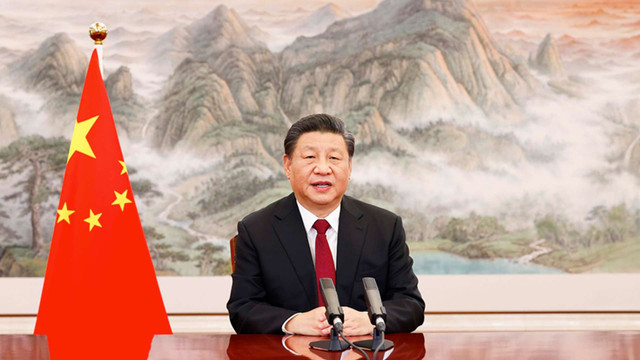
As Israel’s June 13, 2025, airstrikes on Iranian nuclear facilities and military targets ignite a perilous escalation, the world watches for great power responses. While the U.S. treads cautiously, limiting itself to defensive aid, and Russia engages in diplomatic posturing, China has adopted a strikingly passive stance—condemning the strikes, calling for “restraint,” and offering vague mediation. Yet, this inaction is a masterstroke of strategic opportunism.
By doing nothing, China is already winning, consolidating its economic leverage, geopolitical influence, and global image without firing a shot. Drawing on official statements, trade data, and geopolitical analysis, this article explores how China’s restraint in the Israel-Iran conflict positions it as the conflict’s quiet victor.
The Art of Doing Nothing: China’s Strategic Gains
Economic Leverage Through Energy Dominance
China, Iran’s largest oil buyer, imports over 1 million barrels daily, accounting for 40% of Tehran’s crude exports, per the International Energy Agency. As the Israel-Iran conflict threatens the Strait of Hormuz—through which 20% of global oil flows—Brent crude has climbed to $95 per barrel, with Goldman Sachs warning of a potential spike to $150 if disruptions materialize. While Western economies brace for inflationary shocks, China’s long-term oil contracts with Iran, often priced in yuan, insulate it from market volatility. Beijing’s $400 billion, 25-year deal with Iran, signed in 2021, ensures stable supply even if Gulf shipping falters.
By staying neutral, China avoids antagonizing Gulf producers like Saudi Arabia and the UAE, who supply 30% of its oil. Saudi Arabia, wary of Iranian retaliation, has urged de-escalation, per Reuters on June 16. China’s refusal to take sides preserves its access to OPEC+ markets, positioning it to stabilize global energy prices if the U.S. or Israel escalates. Foreign Minister Wang Yi’s June 14 call for “calm” doubles as a signal to markets that China stands ready to mediate, enhancing its credibility as a reliable economic anchor.
Supply Chain Resilience and Trade Advantage
The conflict risks paralyzing Persian Gulf shipping, a critical artery for semiconductors, pharmaceuticals, and consumer goods. A U.S.-Iran war could double container shipping costs, per Drewry Shipping Consultants, disrupting Western supply chains. China, however, is less exposed. Its Belt and Road Initiative (BRI) has diversified trade routes, with rail links through Central Asia and ports in Pakistan’s Gwadar bypassing Gulf chokepoints. Iran, a BRI partner, hosts Chinese-funded infrastructure, ensuring alternative logistics pathways. Moreover, China’s dominance in manufacturing—producing 30% of global goods, per the World Bank—positions it to fill gaps left by conflict-driven shortages. As Western firms face delays, Chinese exporters gain market share.
Beijing’s neutrality avoids sanctions or retaliatory cyberattacks that could target U.S.-aligned states, safeguarding its $4 trillion export economy. By doing nothing, China lets competitors bleed while its trade machine hums.
Geopolitical Influence Without Risk
China’s inaction amplifies its diplomatic clout. While the U.S. risks alienating Gulf allies by backing Israel, and Russia’s mediation efforts are constrained by its Ukraine quagmire, China emerges as a neutral broker. Its June 15 offer to host Israel-Iran talks, reported by Xinhua, burnishes its image as a peacemaker, contrasting with Washington’s hawkish reputation. Saudi Arabia and Qatar, key U.S. allies, have praised China’s “balanced” stance, per Al-Jazeera, signaling openness to Beijing’s mediation.
Iran’s reliance on China as an economic lifeline gives Beijing leverage to nudge Tehran toward restraint. A senior Iranian official told Axios on June 16 that Tehran would consider nuclear talks if China brokers a ceasefire, a concession unlikely under U.S. pressure. By staying above the fray, China strengthens its Middle East footprint, building on its 2023 Saudi-Iran détente. This diplomatic capital could translate into preferential access to Gulf investment funds, worth $3 trillion, per the Sovereign Wealth Fund Institute.
Global Image as a Responsible Power
China’s restraint crafts a narrative of responsibility, appealing to the Global South. While the U.S. deploys THAAD batteries and Israel faces UN condemnation, China’s state media frames Beijing as a champion of sovereignty and stability. A June 17 Global Times editorial criticized “Western adventurism” for fueling the conflict, resonating with nations wary of U.S. hegemony. This soft power play bolsters China’s leadership in forums like BRICS, where it advocates for a multipolar order.
By avoiding military entanglement, China sidesteps the backlash that plagued U.S. interventions in Iraq and Afghanistan. Its $1 billion annual UN peacekeeping contributions and vaccine diplomacy during COVID-19 already lend it moral credibility. Inaction in the Israel-Iran crisis reinforces this, positioning China as a steady hand amid Western chaos.
Risks of Inaction? Minimal for China
Critics might argue that China’s passivity risks ceding influence to Russia or alienating Israel, a tech trade partner. But these concerns are overstated. Russia’s economic constraints limit its Middle East ambitions, and Israel’s $20 billion trade with China pales against Beijing’s $200 billion Gulf commerce. If the conflict escalates, China can pivot to mediation, as it did in Yemen in 2024, without sacrificing neutrality. Even if Iran pursues nuclear weapons—threatened on June 15, per Al-Monitor—China’s economic grip ensures it can shape Tehran’s calculus, unlike the U.S., which faces direct security risks from proliferation.
Conclusion: Winning by Watching
China’s decision to do nothing in the Israel-Iran conflict is a calculated triumph. By preserving energy access, shielding supply chains, expanding diplomatic influence, and burnishing its global image, Beijing reaps rewards without cost.
As the U.S. grapples with domestic war fatigue and Gulf allies hedge their bets, China’s neutrality positions it to mediate or profit from the fallout. The conflict’s trajectory—escalation or ceasefire—matters little to Beijing, which has already secured its strategic edge. In a region where action often breeds failure, China’s inaction is a blueprint for victory.
Cited from multiple sources: Reuters, Axios, Al-Jazeera, Al-Monitor, Global Times, Xinhua; Goldman Sachs, IEA, World Bank, Drewry.