
Why So Bitter?: Identifying Negative Stereotypes Toward Alternative Subcultures

Alternative and goth focused writing, English Language and Literature student from Universitas Airlangga
·waktu baca 5 menit


Tulisan dari aulia sita tidak mewakili pandangan dari redaksi kumparan
Case studies of intercultural conflicts and resolutions.
Have you ever felt confident going out with your new dyed hair, full-black outfit, and new piercing? But somehow a random granny looks at you like you're some kind of alien that got lost on earth. Well, that's how alternative people often felt on a daily basis.
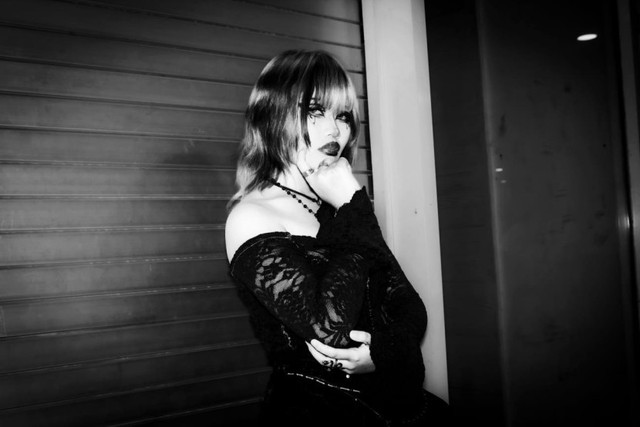
 Perbesar
First of all, what is an alternative? "Alternative" is an umbrella term for subcultures that separate themselves from mainstream culture and use it as a resistance against mainstream and conservative ideas.
Alternative culture derived themself from punk and then created many types of subculture, such as goth, emo, gyaru, scene, grunge, cyber-goth, metalhead, jugglehead, and even punk itself became their own separate subculture. And although each subculture has its own unique style, all of them are always connected by the same purpose, that is to rebel against popular norms.
So alternative people often dress differently in order to give a non-verbal statement about their beliefs, and it is pretty challenging because not everyone understands it, especially for older generations that rarely know about it. And rather than trying to understand, people often label alternative culture as satanic, evil, or even troublemaker.
The most common label toward alternative culture is the “satanic” or “evil” stereotype. This stereotype has been created since a long time ago by religious groups of people, there was even an ad in 1987 with the title “Warning Sign of Satanic Behavior" that claimed “a behavior of listening to heavy metal rock music” as an act of satanism.
The “satanic” label is probably caused by the use of Wiccan symbols and the dark theme that are often used commonly in alternative style and music, especially in the goth subculture. As an example, goth people use the Wiccan symbol to express their religious belief, but people mistook it for a pentagram. This misleading of a meaning is causing a bad reputation toward alternative people and stereotyping every alternative person as satanic.
The second most common label applied to alternative people is the “troublemaker” stereotype. This stereotype is often labeled toward the punk subculture, according to Putra in Intersecting Belongings: Creative Arts and Beyond (2014). In Indonesia people mainly see punk in a negative way, such as troublemakers, anti-social, drunken, and dangerous due to their outfit and appearance. People judge the appearance of punk, although it has its own reason, purpose, and meaning.
The “Troublemaker” label causes people to have a prejudice toward alternative people and often use it as a tool to mock and blame them as the cause of negative things. And this could lead to an act of hate crime, which is commonly happening toward alternative people.
As an example, in the murder of Sophie Lancaster in 2007, 19-year-old Lancaster and her boyfriend, Robert Maltby, get attacked by a group of teenage boys solely because of their “goth” appearance. This hate crime toward alternative people is really common; there are many cases, including other subcultures like emo, metalhead, and punk.
The "Troublemaker" stereotype may also be influenced by the misinterpretation of the "anarchy" symbol and its associated ideology. Often people think anarchy means riot and violence, although anarchy is an ideology that rejects authority and prefers a society without rulers or government.
The reason why people often think alternative culture is a bad thing could be explained by the social identity theory. According to Barker (2003), social identity theory is a way of people thinking of themselves and others by putting them into a group and distinguishing themselves from another group as an opposition. And this group emphasizes the similarities and differences between themselves and other groups to boost their self-esteem.
So common people think that people in alternative culture are a different group, so they see it as an opposition and compare the common way and alternative way. And because they are coming from different groups, there is a bias that thinks our group is better than the other. So that's the reason why regular people often see alternatives in a negative way. Well, there is another question that has not been answered yet. Why does the older generation have a bad stereotype toward alternative people? Although they live in the same era as the creation and the rise of alternative subculture.
This could happen because back then the agenda of antagonizing alternative people got popular in the 80s till the 90s, so those people that grew up in those eras are influenced by the hatred toward alternative culture and grow up believing the stereotype. That's why older generations usually hate and put bad stereotypes onto alternative people.
It's ironic how people always judge so easily only by appearance, even spreading false rumors, bullying, killing, and forcing a community to accept bad labels, although it's not entirely true. All the burden that alternative people have been facing needs a possible solution, such as people needing to respect and show empathy toward each other, learn to understand other subcultures, and not believe entirely in stereotypes because stereotypes rely on bias. So at last I hope that a better future could be created between each other so hatred could be ended.
Daftar Pustaka:
Barker, M. (2003). Satanic Subcultures? A Discourse Analysis of the Self. Cultural expressions of evil and wickedness: Wrath, sex, crime, 3, 37.
Putra, B. A. Equity of Rights In Punk Community: A Case Study of Suara Realita Song. In Proceeding of the 2nd International Conference for Asia Pacific Arts Studies (p. 138).
UFOCULTVHS1. (2019, February 11). WARNING SIGN OF SATANIC BEHAVIOUR [Video]. YouTube. https://youtu.be/byUvJDXqxa4?si=mDlxv9HY5U2KH8NJ