
The Great Gatsby: Why Gatsby Falls in Love with an Idea, Not a Person



Tulisan dari Bimbi Fitria Kusuma tidak mewakili pandangan dari redaksi kumparan
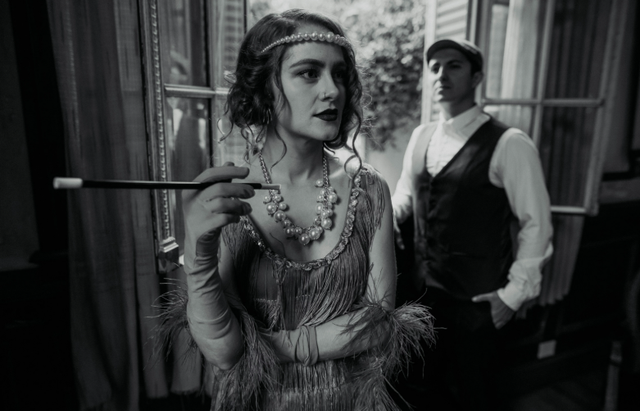
 Perbesar
When we think about love stories, we usually imagine two people who fall in love and eventually stay together.
The Great Gatsby gives us a very different kind of love story.
Written by F. Scott Fitzgerald in 1925, the novel tells the story of Jay Gatsby, a wealthy and mysterious man who still loves Daisy Buchanan, a woman from his past.
Gatsby becomes rich and successful, but all of his achievements seem to have one purpose: getting Daisy back.
At first, Gatsby's story looks romantic.
But the more we look at his relationship with Daisy, the more we can see that Gatsby may not really be in love with Daisy as she is.
He is in love with the idea of Daisy.
Gatsby Wants His Past Back
Gatsby and Daisy first met several years before the main story begins.
At that time, Gatsby was not rich. Daisy came from a wealthy family, and their different backgrounds made their relationship difficult.
Gatsby eventually leaves, and Daisy marries Tom Buchanan.
Years later, Gatsby becomes extremely wealthy. He owns a huge mansion, has expensive cars, and often throws big parties.
But despite all his money, Gatsby is still thinking about Daisy.
His house is even located across the water from Daisy's home.
It seems that everything he has built is connected to one goal: bringing Daisy back into his life.
Gatsby believes that if he becomes successful enough, he can have the life he always wanted.
But there is one problem.
The past has already changed.
Daisy Is Not the Same Person
Gatsby remembers Daisy as the woman he loved years ago.
In his mind, she is almost perfect.
But Daisy is a real person, not a perfect memory.
She has changed. Gatsby has changed. Their lives have changed.
This is where Gatsby's dream becomes unrealistic.
He does not simply want to know Daisy again.
He wants everything to be exactly as it was before.
He wants Daisy to forget her marriage and return to the relationship they had in the past.
Gatsby even believes that Daisy can say she never loved Tom.
He wants the past to become the present again.
This shows that Gatsby is not only chasing Daisy.
He is chasing a memory.
When a Dream Becomes Too Big
Sometimes we do something similar in our own lives.
We remember a person from the past and think about how wonderful everything used to be.
Maybe it was an old friend.
An old relationship.
A childhood dream.
Or even a previous version of ourselves.
But memories are not always the same as reality.
We often remember the good parts and forget the problems.
Gatsby does this with Daisy.
He creates an image of her in his mind and spends years trying to reach that image.
The problem is that no real person can compete with an ideal version created in someone's imagination.
Daisy cannot be the perfect woman Gatsby remembers because she is simply human.
The American Dream
Gatsby's story is also connected to the American Dream.
The novel takes place during the 1920s, a period known for economic growth, parties, and consumer culture.
Gatsby appears to have achieved the American Dream.
He starts with very little and becomes extremely wealthy.
He has the mansion, the clothes, the cars, and the lifestyle.
From the outside, he has everything.
But he is still not satisfied.
His money cannot guarantee Daisy's love.
This shows one of Fitzgerald's important ideas: wealth can give us many things, but it cannot give us everything we want.
Gatsby believes that becoming rich will help him get Daisy back.
But money cannot bring back the past.
The Green Light
One of the most famous symbols in The Great Gatsby is the green light at the end of Daisy's dock.
Gatsby often looks at it from across the water.
The green light represents Daisy, but it can also represent Gatsby's dreams.
It is something he can see, but cannot quite reach.
This makes the green light a good symbol for the way Gatsby lives.
He is always looking toward something in the future.
He believes that one day he will finally get what he wants.
But when he gets closer to his dream, reality does not match what he imagined.
Why Gatsby's Story Is Still Relevant
Gatsby's story was written almost a hundred years ago, but the idea behind it still feels familiar.
Many people have their own version of the green light.
It could be a dream job.
A certain amount of money.
A relationship.
A house.
A better life.
We sometimes tell ourselves:
"When I get that, I will finally be happy."
Gatsby does exactly this.
He believes Daisy is the missing piece of his life.
But the novel shows us that putting all our happiness into one person or one dream can be dangerous.
Because when reality finally arrives, it may not look like the dream we imagined.
Gatsby Does Not Want to Move On
The saddest part of Gatsby's story is that he cannot accept that people and situations change.
He believes that if he tries hard enough, he can bring the past back.
But we cannot really go back.
People grow older.
Relationships change.
Our priorities change.
And sometimes, the person we once loved is no longer the person we remember.
Gatsby refuses to accept this.
He keeps looking toward the same dream.
And that dream eventually becomes his biggest weakness.
Conclusion
The Great Gatsby is often described as a tragic love story.
But it is also a story about dreams and the danger of confusing dreams with reality.
Gatsby loves Daisy, but he also loves the version of Daisy he has created in his mind.
He spends years trying to recreate a past that no longer exists.
His money helps him get closer to Daisy, but it cannot change reality.
Perhaps that is why Gatsby's story is still interesting today.
We all have things we want.
Sometimes we chase them because they are truly important to us.
But sometimes we chase them because we believe they will finally make us happy.
The question is:
Are we really chasing the thing we want, or are we chasing the version of it that exists in our imagination?