

Mengenal Attribution Model Dalam Google Analytics



Tulisan dari Fajar Widi tidak mewakili pandangan dari redaksi kumparan
Dalam sebuah bisnis digital, saya bilang sekarang adalah eranya conversion rate. Sudah bukan lagi jamannya di divisi digital marketing untuk hanya berfokus ke besaran jumlah fans/follower di social media.
 Perbesar
Di tengah tren bisnis global yang mengalami kerugian dimana-mana, unit digital marketing dituntut untuk berkontribusi pada sales.
Hah? Sales? Bagaimana caranya?
Bagi yang baru pertama kali bermain di ranah digital mungkin sedikit protes kenapa digital marketing yang seharusnya membawa kontribusi awareness dan engagement sampai harus dibebani sales. Percayalah saudara, cepat atau lambat wajah industri digital akan berubah.
Bisnis tidak hanya diharuskan untuk memikirkan awarness dan engagement saja, melainkan value lainnya. Value tersebut hanya ada dua dalam kurun 2015 ini : CRM atau e-Commerce
Dalam beberapa seminar dan digital marketing summit selama 2014 yang hamba ikuti, CRM atau e-Commerce adalah next big thing dalam digital marketing. Okelah mungkin banyak marketers yang masih berpikiran sempit. Nih biar hamba jelaskan.
Seorang new wave marketers kini mutlak dituntut untuk memberi kontribusi lebih pada bisnis perusahaan. Kontribusi itu adalah Retention atau Sales. Pilih mana? CRM atau e-Commerce?
Mengenal Attribution Model
Dalam Google Analytics dikenal Attribution Model. Singkatnya dalam sebuah campaign digital, kita harus bisa melakukan tracking terhadap semua traffic yang berujung ke conversion.
Contoh:
Perusahaan A melakukan launching produk baru dengan beberapa channel digital mereka. Pertama, konsumen melihat sebuah iklan produk tersebut pada AdWords. Konsumen pun mengabaikannya.
Lantas prusahaan memposting konten social media yang juga dilihat konsumen tersebut. Konsumen tersebut hanya melihat-lihat kontennya saja. Seminggu kemudian, ia menerima email blast dari perusahaan tersebut. Akhirnya dia meng-klik email tersebut dan melakukan purchase di website.
Ada tiga hal dalam digital campaign ini. Adwords , Social Media, dan email. DIkutip dari Google Analytics help dikenal default attribution model sebagai berikut.
Default attribution models
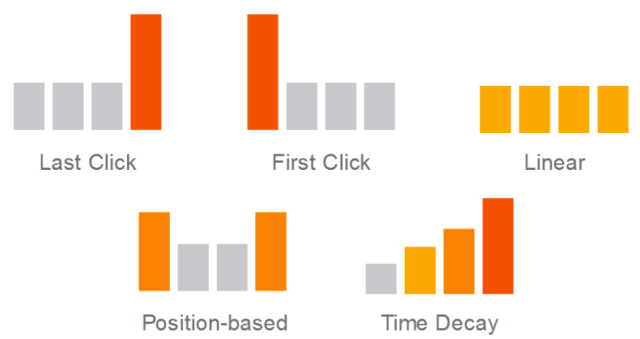
Last Interaction Model - The Last Interaction model attributes 100% of the conversion value to the last channel with which the customer interacted before buying or converting.
When it’s useful: If your ads and campaigns are designed to attract people at the moment of purchase, or your business is primarily transactional with a sales cycle that does not involve a consideration phase, the Last Interaction model may be appropriate.
Last Non-Direct - The Last Non-Direct Click model ignores direct traffic and attributes 100% of the conversion value to the last channel that the customer clicked through from before buying or converting. Google Analytics uses this model by default when attributing conversion value in non-Multi-Channel Funnels reports.
When it’s useful: Because the Last Non-Direct Click model is the default model used for non-Multi-Channel Funnels reports, it provides a useful benchmark to compare with results from other models.In addition, if you consider direct traffic to be from customers who have already been won through a different channel, then you may wish to filter out direct traffic and focus on the last marketing activity before conversion.
Last AdWords Click ~ The Last AdWords Click model attributes 100% of the conversion value to the most recent AdWords ad that the customer clicked before buying or converting.
When it’s useful: If you want to identify and credit the AdWords ads that closed the most conversions, use the Last AdWords Click model.
First Interaction Model - The First Interaction model attributes 100% of the conversion value to the first channel with which the customer interacted.
When it’s useful: This model is appropriate if you run ads or campaigns to create initial awareness. For example, if your brand is not well known, you may place a premium on the keywords or channels that first exposed customers to the brand.
Linear Model - The Linear model gives equal credit to each channel interaction on the way to conversion.
When it’s useful: This model is useful if your campaigns are designed to maintain contact and awareness with the customer throughout the entire sales cycle. In this case, each touchpoint is equally important during the consideration process.
Time Decay Model - If the sales cycle involves only a short consideration phase, the Time Decay model may be appropriate. This model is based on the concept of exponential decay and most heavily credits the touchpoints that occurred nearest to the time of conversion. The Time Decay model has a default half-life of 7 days, meaning that a touchpoint occurring 7 days prior to a conversion will receive 1/2 the credit of a touchpoint that occurs on the day of conversion. Similarly, a touchpoint occuring 14 days prior will receive 1/4 the credit of a day-of-conversion touchpoint. The exponential decay continues within your lookback window (default of 30 days).
When it’s useful: If you run one-day or two-day promotion campaigns, you may wish to give more credit to interactions during the days of the promotion. In this case, interactions that occurred one week before have only a small value as compared to touchpoints near the conversion.
Position Based Model - The Position Based model allows you to create a hybrid of the Last Interaction and First Interaction models. Instead of giving all the credit to either the first or last interaction, you can split the credit between them. One common scenario is to assign 40% credit each to the first interaction and last interaction, and assign 20% credit to the interactions in the middle.
When it’s useful: If you most value touchpoints that introduced customers to your brand and final touchpoints that resulted in sales, use the Position Based model.
Selamat Mencoba!