
International Students: It's Time for Indonesia to Realize Global Education

Mahasiswa Fakultas Peternakan Universitas Brawijaya
·waktu baca 4 menit


Tulisan dari OSVALDO MANURUNG tidak mewakili pandangan dari redaksi kumparan
 Perbesar
In this era of globalization, national boundaries are becoming increasingly blurred. The world seems to have become one big place that connects people from all over the world with just one click. This transformation requires the younger generation, especially students, to not only be successful domestically but also to compete globally. Higher education is the main path to creating globally competitive individuals. Therefore, the expansion of global education is a key issue that must be strongly promoted by universities in Indonesia. This is in line with Sustainable Development Goal (SDG) 4, Quality Education, which emphasizes access to quality and relevant education for all.
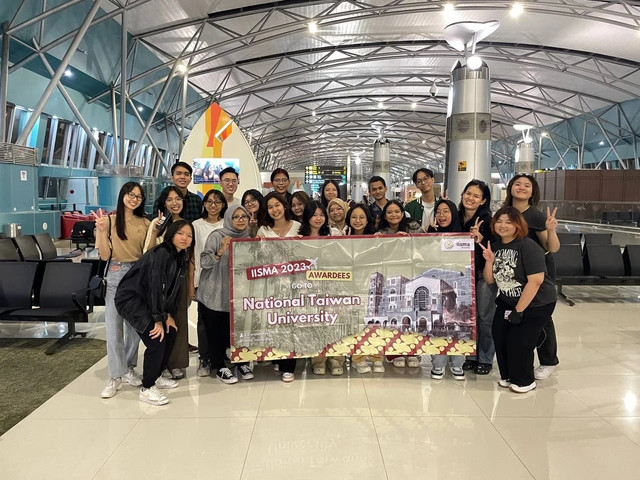
Currently, opportunities for Indonesian students to explore international education are increasingly wide open. Various student exchange programs, summer courses, overseas study programs, and international collaborations are available. Every year, scholarship programs such as LPDP, IISMA, DAAD, and Erasmus+ attract thousands of Indonesian students. Data from the Ministry of Education, Culture, Research, and Technology (Kemendikbud) in 2023 shows that more than 2,600 Indonesian students are participating in study abroad programs through private schools and collaborations with foreign universities. This proves that our students have the potential to compete with students from other countries.
However, this valuable opportunity is often not accompanied by thorough preparation. Many students are still afraid to take exams due to English language barriers, limited knowledge, and a lack of confidence. Many assume that studying abroad is only for those who are intelligent or financially well-off. In fact, the ability to study abroad is not only a matter of academic excellence, but also the courage to learn new things and go beyond one's comfort zone. Another problem is the unequal access to learning spaces and technology in higher education. Students in big cities are more accustomed to interacting with the world, while students in rural areas have difficulty finding the internet and good learning materials.
Furthermore, Indonesia's education system still needs to be reformed to meet international standards. Critical thinking skills, interdisciplinary collaboration, and scientific communication in English must be taught consistently from the beginning of their education. Some students also expressed concerns about the balance between academic requirements and preparation for selecting international students. This shows that education reform should not only focus on achieving academic excellence, but also encourage students to prepare themselves for healthy and sustainable competition.
On the other hand, institutional support is often uneven. Several large universities, such as UI, ITB, UGM, and UB, have established international partnerships, opened international classrooms, and set up International Offices. However, at smaller or regional universities, these opportunities are still limited. However, expanding international education does not always mean sending students abroad. Digital collaboration, such as online exchanges, collaborative learning, or online research projects, is a good first step. This can serve as a bridge for students who are unable to immediately continue their studies abroad.
The role of the government should not be overlooked. The Ministry of Education must increase funding opportunities for outstanding students from various regions and provide equivalent foreign language courses. In addition, universities must be more committed to providing information about global opportunities, guiding students through the application process, and creating a learning environment that encourages courage and creativity.
Students also play an important role in shaping the world. If Indonesia wants to create a skilled society, it must dare to dream big. Participating in global events not only broadens horizons but also encourages cultural change and independence. Today's world needs a generation that can work with everyone, regardless of race, nationality, or beliefs. Global learning means learning to understand diversity and becoming part of the solution to global issues, from climate change to educational inequality.
In addition, internationalization also enhances Indonesia's image in the eyes of the world. When Indonesian students demonstrate their achievements and contributions at international conferences, competitions, or research projects, it makes them proud of their country and opens up new opportunities for global cooperation. Therefore, internationalization is not only about “going abroad,” but also about developing Indonesia's potential through its young generation.
Ultimately, education is one of our greatest assets for progress. Internationalization is not an optional feature, but a necessity for Indonesia to remain competitive in global competition. Universities should be bridges connecting students to the outside world, not walls blocking their progress. The government should be present to provide real and equitable support. And students should be people who dare to dream, take action, and proudly represent their country.