
The Price of Existence: Suffering in the Architecture of the Cosmos

Hakim Pengadilan Negeri Pangkajene
·waktu baca 10 menit


Tulisan dari Timothee Kencono Malye tidak mewakili pandangan dari redaksi kumparan
 Perbesar
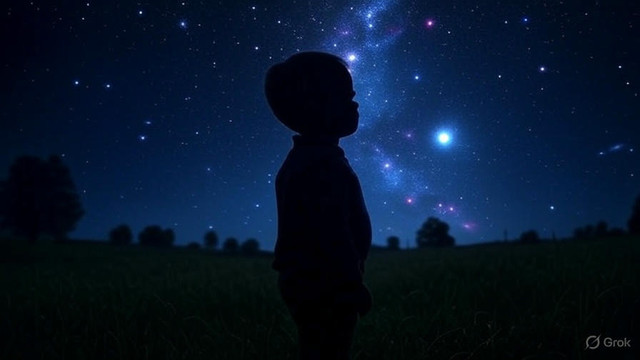
Imagine a universe that hums with unseen rhythms, a vast stage where every life is a fleeting act in a divine drama. This is the vision of some Hindu sages, who called reality a Lila, a cosmic play spun from the infinite essence of Brahman. In this play, there are no distant heavens or hells—just moments of joy or pain woven into the fabric of existence. But what if the actors in this play are not eternal souls, as the ancients believed, but shimmering patterns of quantum wave forms, entangled energies dancing within the living web of Gaia? And what if karma, the law of cause and effect, is not carried by a soul but embedded in these very waves, resonating across generations?
To explore this, let’s turn to a story—a heartbreaking one. A 12-year-old boy, whom we’ll call Arjun, lived a life of unrelenting suffering in a crumbling urban sprawl. Born into a family scarred by rage and neglect, Arjun endured constant pain from failing organs, brutal abuse from those meant to protect him, and a complete absence of kindness. He died alone, in agony, his small body giving out under the weight of a world that offered no reprieve. Arjun’s life was a tragedy, but it’s also a lens into a speculative vision of the universe—one where his suffering was not random, nor the fault of a soul’s past lives, but the outcome of quantum entanglement, where bad wave forms, pulsing with parental karma, scripted his role in the cosmic play.
The Play of Brahman: A Universe Without Souls
In the Hindu tradition, drawn from texts like the Bhagavad Gita and Upanishads, reality is a grand performance, a creative expression of Brahman, the non-dual oneness that underlies all things. The Gita speaks of the soul (Atman) as eternal, carrying karma across lives, shaping each birth and death (2.20-22). Heaven and hell, in this view, are often future realms, but let’s reimagine them as states within life: a moment of love as heaven, a life like Arjun’s—marked by pain and isolation—as hell. Now, let’s strip away the soul, that comforting but cumbersome idea, and replace it with something stranger, more aligned with the mysteries of our quantum age.
Picture the universe as Gaia, a living, interconnected consciousness that pulses through earth, stars, and every being. Within Gaia, each person is a unique configuration of quantum wave forms—patterns of energy, probability, and matter that define our bodies, minds, and experiences. These wave forms are not static; they vibrate, resonate, and entangle, linking us to others in ways science is only beginning to grasp. Arjun’s life, in this vision, was not guided by a soul but by wave forms inherited from his parents, Vikram and Meera, their karma encoded in the very energies that shaped him.
Unlike the Gita’s endless cycle of rebirths, this model is finite. Arjun’s wave forms, burdened with his parents’ bad karma, played out their role in his twelve years of suffering, then dissolved into Gaia at his death, like a melody fading into silence. There was no soul to carry forward, no next life to balance the scales. His story was a single, searing act in the cosmic play, its meaning woven into the dance of quantum karma.
Quantum Entanglement: The Threads of Karma
To understand Arjun’s fate, we must dive into the enigmatic world of quantum entanglement, where particles—and perhaps energies—share fates across vast distances. Vikram and Meera, Arjun’s parents, were not cartoonish villains but deeply flawed humans, their lives a tangle of addiction, anger, and inherited trauma. Their actions—Vikram’s violence, Meera’s cold neglect—were not just personal failings but distortions in their quantum wave forms, the energetic patterns that defined their consciousness and behavior.
Think of these wave forms as ripples in a cosmic sea, each person a unique wave of photons, electrons, and probabilities. When Vikram raged or Meera withdrew, their wave forms grew chaotic, imbued with bad karma—the negative consequences of their choices. These bad forms didn’t vanish; they entangled with Arjun’s being at the moment of his conception, woven into his genetic code and neural architecture. His frail kidneys, prone to failure, were a biological echo of this karma, their dysfunction a physical manifestation of distorted energies. His environment—the cramped apartment, the shouts, the blows—was the external resonance of these forms, drawing negativity like a magnet pulls iron.
This isn’t pure science fiction. Epigenetics shows how parental trauma alters gene expression, passing stress’s shadow to children. Quantum consciousness theories, though speculative, suggest that quantum processes in the brain (e.g. microtubule coherence) might encode complex information, like memories or tendencies. If we stretch this idea, Arjun’s wave forms were entangled with his parents’, their bad karma vibrating through his body and life, attracting abusers and pain as naturally as a storm draws lightning. In the Chandogya Upanishad’s words, “Tat Tvam Asi” (6.8.6)—“Thou art That”—Arjun’s wave forms were part of Brahman, but within the play, they were distinct, resonating with Gaia’s darker currents to script his hell. The usual concept of "heaven" and "hell," in this writing, is the current reality each individual lives in, whether mentally and physically.
A Hell Within the Play: The Resonance of Bad Forms
Arjun’s life was a lived hell, a state of unrelenting torment within the cosmic play. His organ failure sent waves of pain through his small frame, each breath a struggle against the bad wave forms that shaped his biology. His family’s abuse—Vikram’s fists, Meera’s indifference—was the external echo, their actions amplifying the negative resonance. No kindness touched Arjun’s world, no laughter or love broke through, making his existence a stark embodiment of hell—not a fiery underworld, but a reality of isolation and agony.
In this model, quantum entanglement acts as a karmic law of attraction. Arjun’s bad wave forms, entangled with his parents’ karma, vibrated with negative energy, pulling in misfortune—abusive parents, indifferent doctors, a society that looked away. This wasn’t fate or divine will but a resonance, like a tuning fork calling its match. The Gita might argue that Arjun’s soul was divine, enduring pain to resolve karma (2.25), but this vision rejects that comfort. Arjun’s suffering was raw, unsoftened by promises of future lives. His life was, in colloquial term, “shit,” its pain the brutal outcome of bad wave forms, not a soul’s journey.
Yet, there was a fleeting connection to Gaia. In rare moments, Arjun would gaze out his window at a distant bird, his eyes tracing its flight. These glimpses were a faint resonance with the cosmic whole, a reminder that his wave forms, though distorted, were part of Brahman’s infinite field. The play’s hell was not his entirety; it was a role, scripted by entangled energies, but his essence remained tied to the universe’s pulse.
The Curtain Falls: Karma’s End and Gaia’s Embrace
Arjun’s death came on a rainy night, his body too weak to fight the infections that consumed him. Alone in a hospital bed, he took his final breath, pain etching his face even in the end. In the traditional Hindu view, his soul would have moved to a new body, carrying karma forward (Gita 2.22). But in this speculative vision, Arjun’s story ended differently. His wave forms, burdened with parental bad karma, had played their role, exhausting the negative energy in his twelve years of suffering. At death, they dissolved into Gaia, the living consciousness that holds all things, like a single note fading into a vast symphony.
This finite karmic cycle is a radical departure from the Gita’s endless rebirths. Arjun’s suffering was the final act of his parents’ bad wave forms, their karma burned out in his tragic life. There was no soul to reincarnate, no next life to balance the scales. His wave forms, once vibrant with pain, merged into Brahman, the non-dual oneness where distinctions vanish. The Upanishads whisper that all is one, and Arjun’s end was a return to that unity, his individuality—his hell—dissolved into the cosmic whole.
The Question of Justice: Resonance Without Souls
What of Vikram and Meera, whose bad wave forms scripted Arjun’s suffering? In the Gita’s soul-based view, their abuse would bind them to future lives of consequence, karma’s ledger balanced across time (6.16). But in this model, karma stops with Arjun, raising a haunting question: do his abusers escape justice? Quantum entanglement offers a partial answer. Their bad wave forms, vibrating with cruelty, continue to resonate within Gaia, attracting negativity—guilt, chaos, or isolation. This intra-life karma suggests they live in their own hell, shaped by their actions, even if it’s not as visible as Arjun’s.
Still, this justice feels incomplete. Arjun’s suffering was so profound—no goodness, constant pain—that a mere resonance of negativity seems too subtle to match its weight. If their wave forms dissolve at death, as Arjun’s did, where is the enduring accountability? Perhaps Gaia’s field holds a deeper reckoning, a cosmic quantum network where bad wave forms ripple outward, drawing consequences within the play. This is speculative, but it aligns with this vision of resonance: bad forms attract bad things, a law as relentless as gravity, even without souls.
The Cosmic Dance: A Universe of Wave Forms
Arjun’s story is a stark thread in the cosmic play, a reminder that Brahman’s dance is not always beautiful. In the Hindu vision of Lila, the universe is a creative expression, infinite and unbound. But for Arjun, the dance was a dirge, his role a cry of pain. This framework, with its quantum wave forms and entangled karma, offers a way to see this without the soul’s comforting myths. Arjun was not a divine spark awaiting salvation but a configuration of energy, entangled with his parents’ bad forms, resonating with Gaia’s darker currents. His life was hell, his death a release, his story a single act in the vast play.
This vision challenges both spiritual and materialist views. Advaita Vedanta’s non-dual Brahman, where all is one, risks dissolving Arjun’s suffering into illusion (Maya), negating its personal weight. Pure quantum materialism, where consciousness ends at death, renders his life a random tragedy, devoid of meaning. This model bridges these: wave forms carry karma within the play, resonating with Gaia’s field, but dissolve into Brahman’s unity, offering closure without eternal selves. Arjun’s hell was real, his karma resolved, his essence returned to the whole.
Beyond Arjun: The Universe’s Song
Arjun’s life, though brief and brutal, is a note in the universe’s song, a call to ponder the nature of existence. If karma lives in quantum wave forms, entangled and resonant, then every choice we make sends ripples through Gaia’s web. The play is not fixed; its acts are shaped by the energies we weave. Arjun’s suffering, born of bad forms, asks us to imagine a universe where good forms—love, compassion, awareness—resonate instead, creating heaven within the reality of the play.
In this speculative cosmos, there are no souls to save or judge, only wave forms dancing in Brahman’s infinite field. Arjun’s story, though ended, lingers as a question: what resonances will we create? His pain, dissolved into Gaia, is a silent plea to listen to the universe’s hum, to feel its interconnected pulse, and to dance with care in the cosmic play.