
As the 2026 Deadline for Finalizing the Code of Conduct in the South China Sea:

Mahasiswa Hubungan Internasional, Universitas Sriwijaya. Fokus pada penelitian tentang pengungsi dan keamanan internasional
·waktu baca 7 menit


Tulisan dari Yusniar G Simanjuntak tidak mewakili pandangan dari redaksi kumparan
The Importance of Improving the Regional Crisis Management Mechanism
 Perbesar
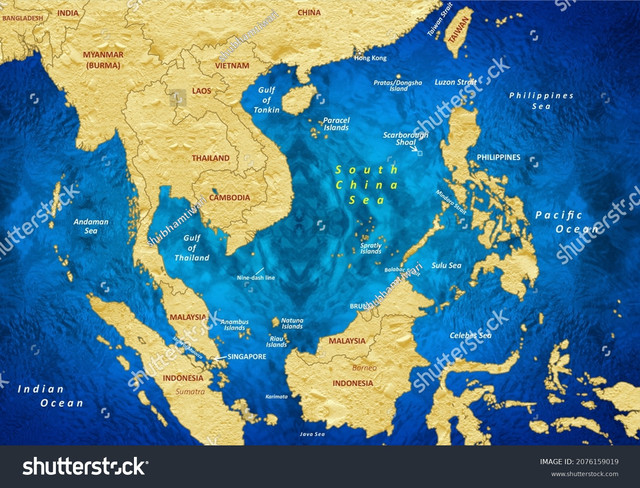
The Code of Conduct in the South China Sea is a diplomatic effort between China and ASEAN countries to manage territorial disputes, with the goal of creating a conducive environment for the peaceful resolution of disputes. If ASEAN and China reach an agreement on the Code of Conduct (CoC) in the South China Sea by the end of this year, will that agreement be sufficient to prevent tensions from escalating into open conflict?
Last July, ASEAN stated that negotiations on the CoC are expected to be finalized by the end of 2026. However, reaching an agreement does not automatically guarantee that every maritime incident can be prevented or addressed promptly. ASEAN foreign ministers themselves have emphasized that practical steps are needed to reduce tensions, accidents, misunderstandings, and miscalculations while the negotiation process is still ongoing. Given these circumstances, the point being made is that strengthening norms of behavior must go hand in hand with crisis management mechanisms. The author argues that ASEAN needs to refine its regional crisis management mechanisms ahead of the 2026 target for finalizing the CoC. This argument is based on three points: the CoC’s limitations in directly addressing incidents, gaps in existing crisis management mechanisms, and the need to strengthen communication and de-escalation within the framework of ASEAN defense cooperation.
We can use Gareth Evans’ 1994 concept of cooperative security to understand this issue; it explains the importance of an approach based on consultation, transparency, and prevention over confrontation, rather than a lack of openness and reacting only after a conflict has occurred. This is relevant in the context of the South China Sea, as the CoC provides a framework in the form of rules of conduct, while, on the other hand, crisis management mechanisms are needed to help the parties involved communicate with one another and prevent incidents from escalating into confrontation. Managing regional security is not measured solely by diplomatic agreements, but also by the ability of the countries involved to address risks on the ground.
The limitations of the CoC can be seen in the substantive issues that are still under negotiation. (Bernama, 2026) identifies the issues still under discussion in this regard, namely the relationship between the CoC and the DOC, whether the final agreement will be legally binding, the geographic scope of highly sensitive areas, and the definition of terms such as “self-restraint,” which remains open to multiple interpretations. These issues are crucial because they determine the areas, parties, and behaviors that will be regulated under the agreement. The CoC should serve to manage tensions and eliminate triggers of conflict, not act as an instrument for resolving sovereignty disputes. This indicates that the effectiveness of the CoC must be assessed based on the clarity of its rules and their implementation, not solely on the success of the negotiation process.
Therefore, ASEAN needs to strengthen its crisis management mechanisms as a complement to the CoC, particularly to address situations where misunderstandings or maneuvers at sea have the potential to trigger an escalation of tensions.
To support these efforts, ASEAN already has the necessary tools in place. In the joint declaration of the ASEAN Defense Ministers’ Meeting in October 2025, the ministers welcomed the Guidelines for Maritime Interactions (GMI) and the ASEAN Direct Communications Infrastructure (ADI), along with other measures under the DOC framework, as instruments that can help reduce tensions, accidents, and misunderstandings and miscalculations (ADMM, 2025). In addition, the Code for Unplanned Encounters at Sea (CUES) has been developed as a code of conduct for unplanned encounters between naval vessels. The existence of the aforementioned instruments demonstrates that ASEAN and its partners already have a foundation for cooperation in managing maritime risks. However, it must be ensured that these existing mechanisms have adequate scope and can be effectively utilized when incidents occur.
It should be emphasized that the existence of this instrument does not mean that all issues have been resolved. According to (Nouwens, 2024), CUES is not legally binding, but it also applies to navies. In fact, maritime incidents in this region also involve coast guard vessels and maritime militias. He also notes that the GMI appears to be limited to the navies of participating countries and has faced criticism regarding its ability to address challenges in the gray zone. These limitations are quite significant because tensions at sea do not always take the form of confrontations between warships. Therefore, crisis management mechanisms must account for broader interactions among maritime institutions, without disregarding the differences in the functions and authorities of each actor.
The activities of maritime militia vessels demonstrate why this expansion warrants attention. It was recorded that an average of 241 Chinese maritime militia vessels per day were present at monitored locations throughout 2025, up from 232 vessels per day in 2024 (AMTI, 2026). This indicates that the presence of maritime militia vessels in the observed locations has increased, although this does not necessarily mean that every vessel is involved in coercive actions or specific incidents. The main challenge in the context of crisis management is how to reduce the risk of miscalculation when maritime militia vessels, coast guard vessels, and vessels from other countries operate in disputed waters. If communication procedures focus solely on the navy, situations involving other actors may be more difficult to manage. Therefore, ASEAN needs to discuss how existing mechanisms can encompass a broader range of actors as well as relevant types of maritime interactions.
The improvement of crisis management mechanisms can begin by clarifying communication channels and response procedures when incidents occur. ASEAN can promote the establishment of clear points of contact for defense and coast guard agencies, communication protocols ranging from the operational to the diplomatic level, and information-sharing procedures to clarify incidents. These steps should also distinguish the role of the ADI, which supports communication at the defense level, from the operational communication needs among agencies directly involved at sea. With a clear division of roles, crisis management mechanisms can establish a more focused link between intergovernmental coordination and on-the-ground incident response. These recommendations align with Evans’ (1994) principles of cooperative security, which identify consultation and prevention as key elements in building shared security. Their implementation, of course, requires agreement and commitment from the countries involved. In addition to clarifying procedures, ASEAN needs to ensure that the available mechanisms can actually be utilized when a crisis occurs.
In the end, strengthening crisis management must go hand in hand with finalizing the CoC. ASEAN and China need to ensure that negotiations not only result in a general commitment to restraint but also support practical efforts to prevent accidents, misunderstandings, and escalation. This can be achieved by clarifying the relationship between the CoC and existing instruments, while also addressing additional procedures should current mechanisms prove insufficient to cover various types of incidents. ASEAN also needs to maintain communication and exercise mechanisms, even if the CoC finalization process extends beyond the end-of-2026 target. This approach does not view the CoC and crisis management as two mutually exclusive options. Rather, the two need to be integrated so that long-term rules of conduct are supported by procedures that can be applied in real-world situations. In addition to clarifying procedures, ASEAN needs to ensure that available mechanisms can actually be utilized when a crisis occurs.
Therefore, as the 2026 deadline for finalizing the CoC approaches, ASEAN must ensure that diplomatic progress goes hand in hand with the refinement of crisis management mechanisms. The region’s success is measured not only by the achievement of an agreement but also by the ability of the involved countries to prevent maritime incidents from escalating into broader confrontations.