
Why Is Hyperfemininity Seen as “Bimbo”?



Tulisan dari Nasya Regita Nurhayati tidak mewakili pandangan dari redaksi kumparan
 Perbesar
As someone active in the entertainment industry, I am used to performing on stage and being in the spotlight. I take pride in expressing myself through hyperfemininity, a style that highlights traditionally feminine traits through clothing, makeup, and mannerisms.
However, this choice sometimes creates unexpected challenges in academic and creative spaces. Instead of being judged on my ideas, I have felt that my appearance shapes how people see me. When I get a good grade or give a strong presentation, people are sometimes surprised, as if my success does not match the way I look. Sometimes, they even call it luck instead of effort.
These experiences made me ask a question:
"why is femininity so easily linked to a lack of intelligence?"
I chose not to change my appearance to win approval. Instead, I chose to stay true to myself and challenge the assumptions attached to my identity. One label captures this prejudice well: “bimbo.” It is more than a casual insult. It reflects a stubborn stereotype that places beauty and intelligence on opposite sides, especially when women openly express their femininity.
What Is Hyperfemininity, and Why Does the “Bimbo” Label Stick?
Hyperfemininity means emphasizing traits traditionally associated with women. It can show up in clothing, makeup, speech, and body language. But expressing femininity does not mean accepting every traditional expectation of womanhood.
Sandall (2024) studied hyper-feminine “bimbo” identities on TikTok and how popular culture interprets them. The word “bimbo” is often used to describe a woman seen as attractive but unintelligent. It is closely tied to the “dumb blonde” trope, which suggests that beauty and intelligence cannot go together.
The problem is not femininity itself. The problem is the meaning society attaches to it. A woman who wears pink, puts on bold makeup, or speaks in a soft, expressive voice may be seen as shallow or less capable before anyone considers her abilities. Yet appearance alone cannot measure someone’s intelligence, skills, or quality of thought.
Sandall (2024) also points out that language shapes social meaning and power. Words do not only describe reality. They can also reinforce social norms and affect how people are treated. A label like “bimbo” suggests that women must meet certain standards before they are respected as intelligent.
Hayah and Mustikawati (2023) make a similar point in their study of women’s stereotypes in Legally Blonde. They show how gender expectations shape the way women’s personalities and abilities are judged.
This raises a fair question: why does a woman’s feminine look so easily become a reason to mock her intelligence? The issue goes beyond one word. It shows a wider pattern, in which women’s competence is judged by how they look and behave.
How Do Nonverbal Cues Feed Gender Stereotypes?
People are not judged through words alone. Clothing, facial expressions, gestures, posture, and tone of voice also shape first impressions.
Nonverbal cues can therefore help form gender stereotypes. Bright clothes, noticeable makeup, and expressive gestures may be read differently depending on whether the person is a woman or a man. Hayah and Mustikawati (2023) discuss how Legally Blonde links women’s appearance, jobs, speech, and personality. Sandall (2024) examines how pink clothing, makeup, and body language become signs of hyper-feminine identity online.
Voice is another example. A high-pitched voice or a very sweet speaking style may be read as immature or unserious. In contrast, an assertive and dominant style is often linked to authority and leadership. These impressions do not reflect real competence. They only show how gender expectations affect the way we interpret communication.
In Western pop culture, for example, “Valley Girl English” is often linked to young women who are stereotyped as shallow. But an accent or speaking style does not say anything about a person’s intellectual ability.
The same pattern can be seen in Indonesia. Social norms that treat men as the main decision-makers can affect how women are viewed at school, at work, and in public life. A gentle woman may be seen as not assertive enough. A firm woman may be criticized as too dominant.
As a result, women face contradictory expectations. They are encouraged to look feminine, yet their femininity is used to question their competence. When they show assertiveness, they may be judged for stepping outside what is expected of them.
Murnen and Byrne (1991) studied hyperfemininity as a concept related to following traditional feminine roles. Their work helps explain how femininity becomes tied to social expectations. Still, we need to separate a person’s own expression of femininity from the stereotypes society attaches to it.
Women should not have to change their looks, hide their femininity, or alter their natural way of speaking just to be taken seriously. Competence should be judged by relevant evidence, such as knowledge, skills, reasoning, and the quality of work.
What Can Legally Blonde Teach Us?
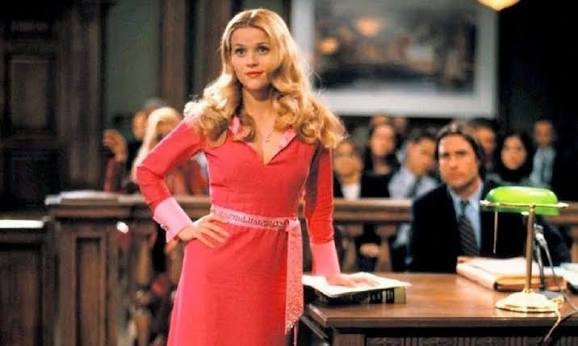
The 2001 film Legally Blonde shows clearly how stereotypes about women work. Its main character, Elle Woods, loves pink clothes, makeup, and a very feminine style. When she enters Harvard Law School, her look becomes a reason for others to doubt her seriousness and intelligence.
Elle faces more than academic challenges. She also faces prejudice that appears before anyone gets to know her abilities. Her appearance is treated as proof that she does not belong in a competitive place like law school.
Using Roland Barthes’s semiotic theory, Hayah and Mustikawati (2023) analyze how the film represents women’s stereotypes. From this view, Elle’s pink outfits are not just fashion choices. They are signs that gain meaning from their social context.
Xu (2024) discusses the film through the lens of the male gaze and gender equality. This helps explain how dismissive looks, comments, and treatment can reinforce the idea that a woman’s appearance matters more than her abilities.
One of the film’s strongest messages is that Elle does not need to give up her feminine identity to prove her competence. She keeps loving pink and keeps her personal style while building her legal knowledge, critical thinking, and professional skills.
This message feels real for many women. Femininity and intelligence are not opposites. Women should not have to choose between being themselves and being taken seriously.
The film also shows how prejudice can limit opportunities. When appearance becomes a reason to doubt someone’s ability, that person may lose recognition that should depend on real performance.
So Elle’s challenge is not only to prove that a feminine woman can be smart. It is to expose an unfair expectation: that women must keep proving themselves because they do not match other people’s image of an intelligent person.
Stop Measuring Intelligence by Appearance
My experience and Elle Woods’s story point to the same problem. Appearance can shape people’s judgment before they understand someone’s abilities.
Wearing pink, speaking softly, enjoying makeup, or choosing a feminine style does not mean a lack of intelligence. In the same way, a look seen as masculine does not automatically show greater rationality, authority, or competence.
We need to separate self-expression from the prejudice attached to it. Everyone should be free to decide how to present themselves without having their intelligence questioned.
Challenging the “bimbo” stereotype also means rethinking how we judge others. In academic settings, ideas should be judged by the strength of their arguments and evidence. In workplaces, competence should be judged by skills, responsibilities, and performance. Appearance should not replace these more meaningful standards.
In the end, femininity is not the opposite of intelligence. No clothing color, tone of voice, or fashion style decides whether someone can think critically, solve problems, or contribute to society.
I want to keep expressing myself femininely without having my intelligence questioned because of it. Respect for women should not depend on how closely they follow society’s preferred look.
We should not ask women to change how they look to seem intelligent. Instead, we should challenge the assumptions that make their intelligence seem doubtful just because they choose to express their femininity.
References
Hayah, L. M., & Mustikawati, Y. (2023). Women stereotype in “Legally Blonde” movie. Journal of English Literature and Linguistic Studies, 2(1), 102.
Murnen, S. K., & Byrne, D. (1991). Hyperfemininity: Measurement and initial validation of the construct. Journal of Sex Research, 28(3), 479–489.
Sandall, H. (2024). BimboTok: A critical discourse analysis of hyper-feminine bimbo identities on TikTok. Media International Australia, 193(1), 65–79.
Xu, Z. (2024). Legally blonde male gaze and gender equality. Communications in Humanities Research, 43(1), 69–73.